

Everyone failed Lindsay Clancy
It could’ve happened to you, too.

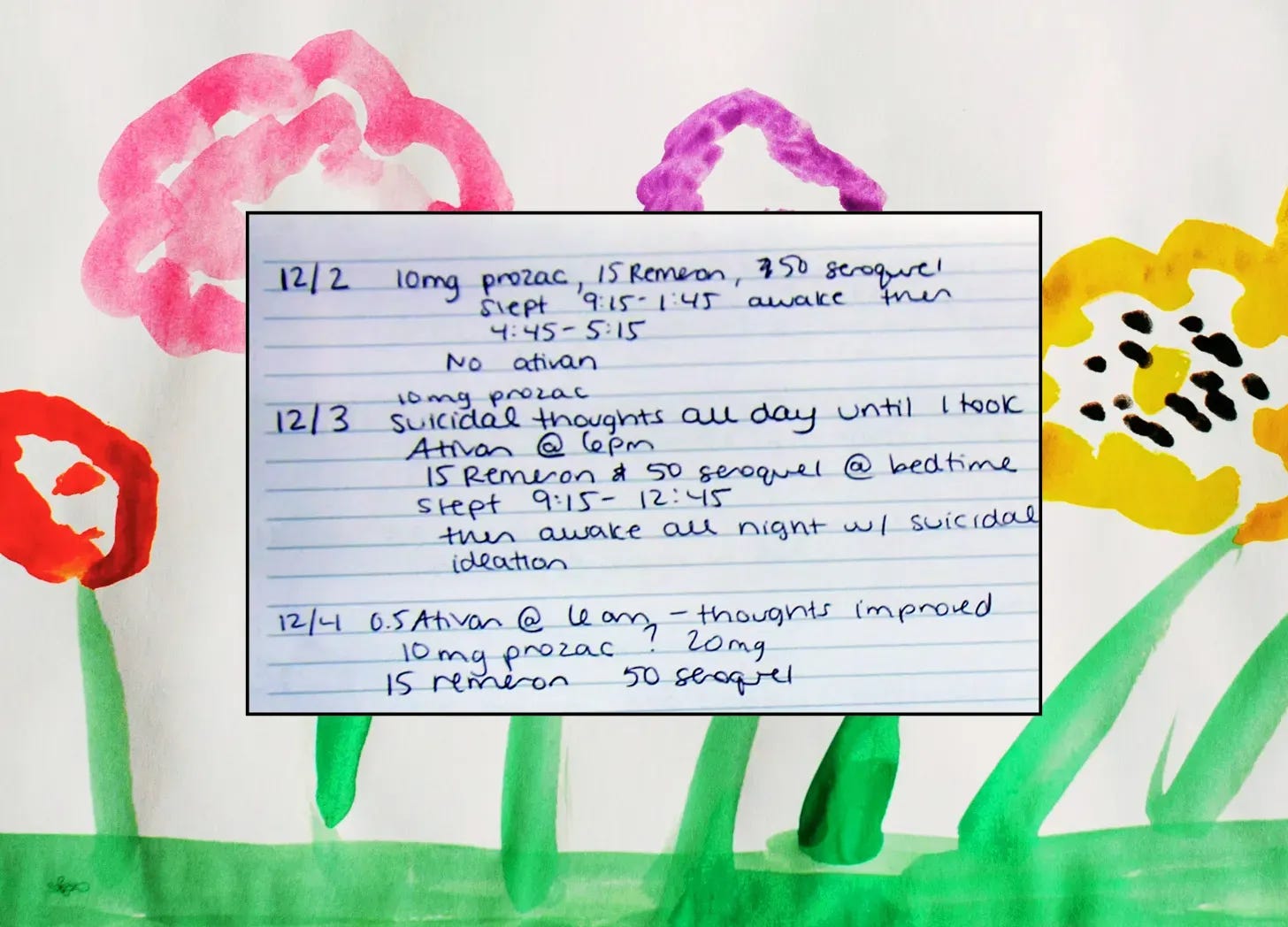
”I am completely overwhelmed.”
“I’m drowning every day.”
“I feel guilty.”
“I’m really worried about going back to work.”
If you are a mother, you could have written any of these confessions.
Each of these was written by Lindsay Clancy.
I’ve been following her story for weeks, trying to figure out how to write about it. I still don’t have that figured out. So I’m just going to write anyway.
Lindsay Clancy was a labor and delivery nurse, helping to bring babies into the world. She was a wife, and a mother of three children under six, and by every account from the people who loved her, she was devoted to them. Her nanny said she was a wonderful mother. Her husband said the same. He testified that even in the depths of her psychosis, she was the one who still managed to plan and buy the supplies for their daughter’s birthday party. His wife, drowning in a mental health crisis so severe it eventually cost her children their lives, was weeks before, still doing the invisible labor of motherhood, still trying hard to be a “good mom.”
She was set-up to fail.
We spend nine months worshipping women when they are pregnant. We throw showers. We ask for the due date and run a countdown clock. And then the baby arrives, and the mother, the body and soul who nourished and protected this child for almost a year, disappears from the frame. Before she leaves the hospital, she has a 30% chance of being screened for postpartum depression, and most likely using a 10-question survey created in 1987. A single piece of paper that’s shorter than the paperwork to register the new baby for a Social Security Number will confirm if she’s mentally fit to keep both herself and her new baby alive at home. Nobody asks mom how she’s sleeping. Nobody asks to come over to hold her. Nobody follows up in any meaningful way between birth and her six week check-up that lasts 30 minutes. And after that visit, well, good luck, babe! She’s on her own.
“We discard the mother by the time she’s given birth to the child.”
Dr. Anna Malaika Tubbs, No Country for Mothers
American motherhood is not broken by accident. It is functioning exactly as designed. We do not mandate paid maternity leave. We let women die during childbirth. We do not offer affordable childcare. We do not give mothers the job protection or flexibility they need. We ask women to do the most physically and psychologically demanding work of their lives with none of the infrastructure that every other wealthy nation considers a non-negotiable. And then, when a mother cracks under a weight no person should be asked to carry alone, we call her the worst thing you can call her: a bad mother.
The fear of being a bad mother in a country that disrespects them all the same is killing us. It was the fear of being a bad mother that drove Lindsay to leave in-patient care and jump head first into buying balloons for her daughter’s birthday. It was the fear of being a bad mother that kept her up late at night, wondering how she could both show up for her children and pay the bills.
Lindsay asked for help. She tried multiple times, multiple ways, with multiple providers to get well. And still, the system that was supposed to catch her did not catch her. Everybody, and I mean, everybody in Lindsay’s life failed her and her children.
Postpartum psychosis is a psychiatric emergency, one of the most dangerous conditions in all of maternal medicine, and we do not treat it like one. We love to call it “rare” but it affects up to 7,000 American women a year, and about half of those women will have zero pre-existing psychiatric history. We have the highest maternal mortality rate in the industrialized world, and that statistic does not even capture what happens to the women who survive childbirth only to be left alone with a mind that has turned against them.
And then there’s us. Women are our second-worst enemy in this nightmare. I have read the comment sections under every story about Lindsay in my feed, and I wish I could tell you it was mostly men being cruel. They are there, commenting without lived experience. But women who should know better are drowning them out.
There’s a reason so many mothers are hooked on this case, following it religiously like a serial true crime podcast. E.J. Dickson has a theory about this phenomenon in her excellent book One Bad Mother. She writes about our cultural appetite for stories of mothers who harm their children, and why women in particular become engrossed. Some follow along out of sheer genuine horror and curiosity. But most, she argues, do it for relief. Every time we consume a story like Lindsay’s and walk away thinking “I would never,” we get to put ourselves on the right side of an invisible line. We get to feel, for a moment, like good mothers, which is the one label this culture has convinced us we might lose at any time. Comparing ourselves to the worst version of a “bad mother” is easier than reckoning with a system that could break any of us.
“I had postpartum depression too, and I didn’t do what she did.”
“I don’t believe her.”
“I would never.”
I see these comments by the hundreds. We want to believe we would never. But every time a woman writes a sentence like that, she is doing the system’s work for it, for free. She is helping erase the fact that postpartum psychosis is not postpartum depression, that it is a distinct and rare and catastrophic break from reality, and that she merely beat a game of chance. You, yes, you, could have done what Lindsay did.
We cannot demand our health be taken seriously, our mental health be taken seriously, our motherhood be taken seriously, while we are first in line to tell each other our suffering is not real. This is the culture wars at play, whether we want to admit it or not, and right now we are losing it from the inside.
Lindsay Clancy needed a country that took her seriously before the worst day of her life. She did not get one. Neither did her children. The least we owe them now is to stop giving reasons why it couldn’t happen to us, and start asking why it was ever allowed to happen to her, and what we’re going to do to stop it for other mothers.
If you or someone you love is in crisis, in danger of harming themselves or their baby, or experiencing symptoms like hallucinations, delusions, or paranoia, do not wait: call 988, the Suicide & Crisis Lifeline, or go to the nearest emergency room. Postpartum psychosis is a medical emergency, not a personal failure.
While you’re here…

No Country for Mothers Film Screening: Virtual Office Hours
Thinking about hosting a screening of No Country for Mothers but have some questions before you commit?
Join us for a casual office hour on Wednesday, August 12, 2:30pm-1:00pm EDT to get your questions answered, hear tips from our team, and feel more confident bringing your gathering to life. No prep needed, just show up!
P.S. Nearly 600 film screenings have already been scheduled across the country? Find one near you. Or, want to attend a virtual screening? We’ve got you covered. View upcoming virtual screenings.
Last week’s Here’s the Thing

The prosecutor’s opening statement that this is trial not about about maternal mental health in America infuriated me.
When I asked my OB if postpartum anxiety was something that came and went, she laughed. She said “mental health isn’t a part-time thing.” I was embarrassed to get any kind of support after that.
If this trial isn’t a conversation about maternal mental health in America, then when are we having that conversation? Because we’re long overdue.
I agree wholeheartedly with your take on her story and before I had children myself I have to admit I was one of those women who said I would never do something like this. It’s only through my lived experience that I can see how something like this is possible. Modern motherhood, is village-less.